
Construction in the capital moves at a relentless pace. From the high-density residential expansions on Reem Island and Saadiyat to heavy industrial developments sprawling across ICAD and Mussafah, project stakeholders face a demanding combination of tight deadlines, severe summer climates, and uncompromising sustainability standards.
Traditional in-situ building methods, which rely heavily on manual site labor, extensive timber formwork, and open-air curing, struggle under these conditions. The intense local heat and high humidity introduce risks of thermal cracking, curing inconsistencies, and costly delays. To overcome these hurdles, forward-thinking developers across the emirate are turning to precast concrete services in Abu Dhabi as a primary driver of efficiency, durability, and structural precision.
The Industrialized Advantage: Factory-Cast vs. On-Site Pours
Shifting structural production from an open desert jobsite to a controlled manufacturing facility fundamentally changes project execution. In a dedicated precast plant, variables like ambient temperature, water-cement ratios, and compaction are tightly managed through automated systems and steam-curing techniques.
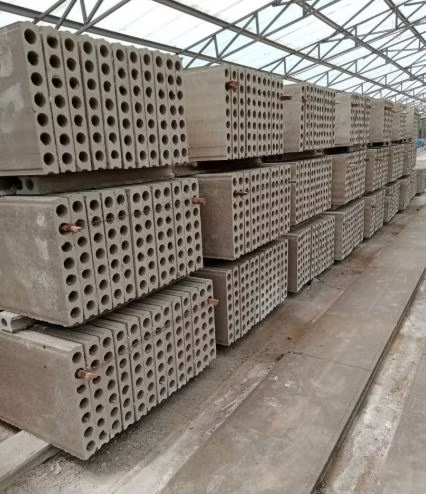
This approach delivers distinct operational benefits:
- Parallel Workflows: While foundation piling and earthworks take place on-site, vertical columns, beams, hollow-core slabs, and boundary walls are manufactured simultaneously off-site. This eliminates months of waiting from the master schedule.
- Superior Material Integrity: Automated vibration and controlled curing yield a dense, high-strength concrete matrix that resists aggressive soil and atmospheric conditions far better than traditional hand-poured methods.
- Strict Code Compliance: Factory-produced elements undergo rigorous batch-testing, ensuring complete alignment with the Abu Dhabi International Building Code (ADIBC) and Department of Municipalities and Transport (DMT) mandates.
Key Precast Applications Driving Modern Infrastructure
1. Residential and Commercial Towers
High-rise developments and multi-story commercial spaces require rapid framing systems. Precast hollow-core slabs provide massive unsupported spans, reducing floor-to-floor heights and allowing mechanical, electrical, and plumbing (MEP) integration to move faster.
2. Infrastructure and Municipal Civil Works
Road networks, drainage systems, and utility corridors rely heavily on standardized, heavy-duty components. Precast box culverts, New Jersey safety barriers, manhole chambers, and cable troughs guarantee long service lives with minimal maintenance disruption to public traffic.
3. Industrial Complexes and Warehousing
Logistics hubs and heavy manufacturing plants demand wide open spaces unobstructed by interior columns. Precast prestressed TT-beams and structural wall panels allow builders to enclose massive industrial footprints in a fraction of the time required by conventional masonry or cast-in-place techniques.
Overcoming Environmental Challenges in the Capital
Abu Dhabi’s coastal humidity and high-salinity soil create an aggressive environment for concrete and steel reinforcement. Top-tier precast fabricators counter this by engineering specialized mix designs utilizing Sulphate-Resisting Cement (SRC), low permeability parameters, and corrosion-inhibiting admixtures. Because precast elements are cast in steel molds with exact cover maintenance, the steel reinforcement remains fully protected against chloride ion attack throughout its operational lifecycle.
Frequently Asked Questions (FAQ)
Q: How much time does precast construction typically save compared to traditional methods? A: Structural completion timelines are frequently reduced by 30% to 50%. Because precast components arrive on site fully cured and ready for immediate erection, projects bypass the traditional 28-day on-site shoring, pouring, and curing cycles.
Q: Can precast concrete elements be tailored for unique architectural facades? A: Yes. Modern precast is highly versatile. Using specialized form-liners, acid-etching, sandblasting, and colored concrete mixes, manufacturers can produce complex geometric textures, smooth architectural finishes, and visually striking exterior cladding panels.
Q: How are heavy precast units safely transported and erected on congested urban sites? A: Precast execution relies on precise logistical coordination. Transport is scheduled using specialized heavy-duty hydraulic trailers, often during off-peak traffic hours. On-site, engineered mobile cranes and certified rigging crews position elements directly from the transport bed into the structural framework, minimizing material storage footprints on site.
Q: What makes precast construction more sustainable for projects in the UAE? A: Factory production virtually eliminates material waste, recycling unused concrete and bypassing the timber formwork debris typical of traditional sites. Additionally, precast elements with high thermal mass help stabilize interior building temperatures, lowering long-term HVAC energy loads.
Q: What should developers look for when selecting a precast supplier in Abu Dhabi? A: Key evaluation criteria include proven regional project experience, ISO-certified manufacturing facilities, robust in-house engineering and shop-drawing capabilities, and full municipal or sector-specific prequalifications (such as ADNOC or ADQ approvals).
